


Can building film faced panels redefine the efficiency and aesthetics of concrete pouring with their smooth surface and high reusability?
Release Time : 2026-01-30
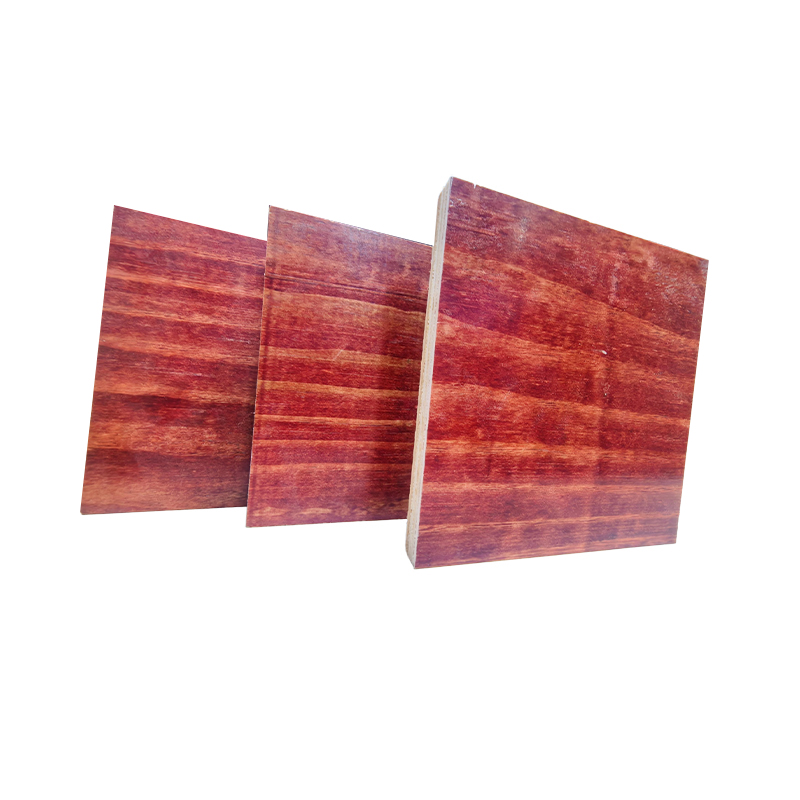
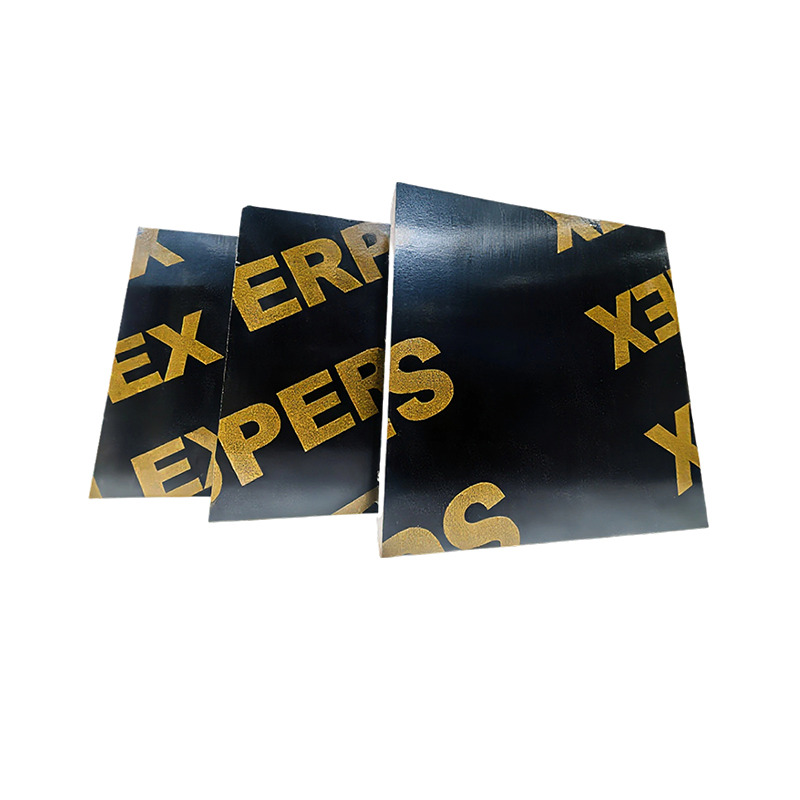
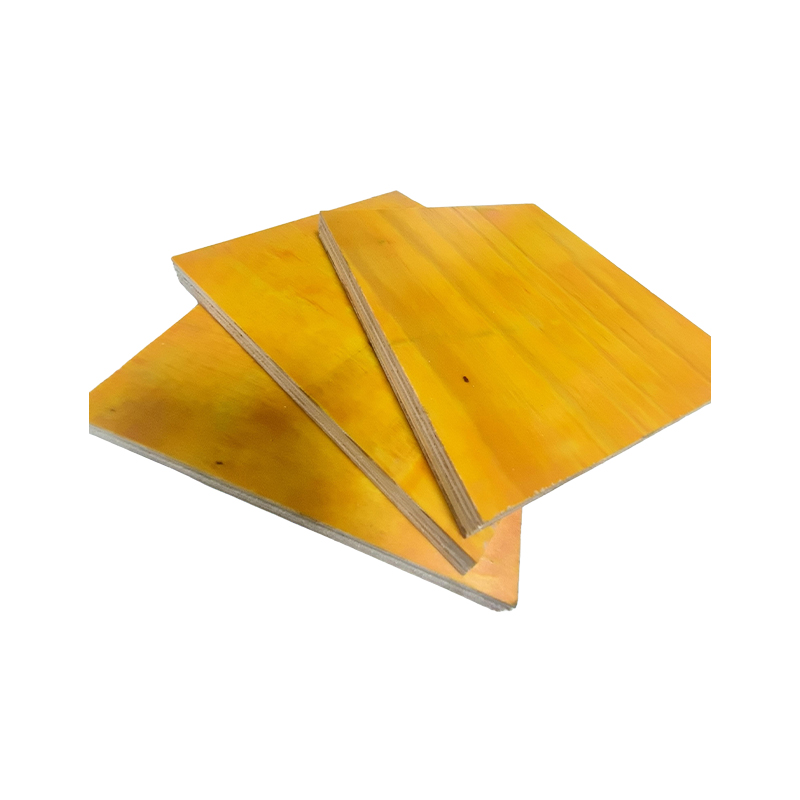
In modern construction engineering, the quality of concrete structure forming not only affects structural safety but also directly impacts the final appearance and subsequent decoration costs. Building film faced panels—special formwork made from high-quality plywood as the base material and a surface of high-strength impregnated paper pressed under heat—are becoming an indispensable construction tool in major projects such as high-rise buildings, bridges, and tunnels due to their superior demolding performance, mirror-like concrete finish, and reusability. They do not bear weight, yet silently support the concrete, giving it precise shape and delicate texture.
Their core advantage lies first in the dual value of the surface film. The phenolic or melamine resin impregnated paper covering the panel is cured under high temperature and pressure to form a dense, hard, and waterproof protective layer. This film not only effectively prevents concrete slurry from penetrating the panel, avoiding the water absorption, swelling, fuzzing, and cracking problems common with traditional wooden formwork, but also leaves a smooth and clean concrete surface after demolding, significantly reducing plastering or grinding processes. For projects involving fair-faced concrete, precast components, or those requiring extremely high precision in surface finishes, clad laminated panels directly determine the success or failure of "one-time molding."
In terms of construction efficiency, high turnover and ease of operation significantly reduce overall costs. High-quality clad laminated panels have sealed edges, making them impact-resistant and wear-resistant, maintaining structural integrity even after multiple hoisting, dismantling, and stacking operations. Their moderate weight facilitates manual handling and installation; standard dimensions and flatness ensure tight joints, reducing the risk of grout leakage. In large projects, the same clad laminated panel can be reused dozens of times without significant deterioration, greatly saving on material procurement, transportation, and waste disposal costs compared to disposable wooden formwork, aligning with green construction principles.
A deeper value lies in their adaptability to complex structures and harsh environments. Clammed laminated panels can be cut, drilled, and nailed, flexibly adapting to complex shapes such as curved beams, irregular columns, or curved walls; their excellent weather resistance prevents deformation in rainy seasons or humid environments, ensuring continuous construction progress. Some high-end products also possess flame-retardant, anti-slip, or UV-resistant properties, making them suitable for special applications such as tunnel linings and cross-sea bridge piers. This combination of rigidity and flexibility makes them a reliable partner for modern engineering in addressing diverse challenges.
Furthermore, sustainability is integrated throughout their lifecycle. The base material is mostly plywood made from fast-growing timber, a renewable resource; the film-coating process reduces the need for on-site application of release agents, lowering chemical pollution; and after disposal, the panels can be crushed for energy recovery or landfill coverage, reducing the environmental burden. Driven by dual-carbon goals, the efficient utilization of film-coated panels is becoming a crucial part of the construction industry's carbon reduction practices.
Ultimately, the significance of a building film faced panel lies not in how long it is covered by concrete, but in how it allows the rough pouring process to produce sculpturally precise results. when the inner walls of high-rise core tubes require no secondary treatment—behind this seemingly ordinary film coating, with industrial precision, achieves architectural beauty. Because in the logic of modern construction, true efficiency is not about how fast you are, but about leaving dignity and space for the next step in every process—silent support, yet shaping eternity.
Their core advantage lies first in the dual value of the surface film. The phenolic or melamine resin impregnated paper covering the panel is cured under high temperature and pressure to form a dense, hard, and waterproof protective layer. This film not only effectively prevents concrete slurry from penetrating the panel, avoiding the water absorption, swelling, fuzzing, and cracking problems common with traditional wooden formwork, but also leaves a smooth and clean concrete surface after demolding, significantly reducing plastering or grinding processes. For projects involving fair-faced concrete, precast components, or those requiring extremely high precision in surface finishes, clad laminated panels directly determine the success or failure of "one-time molding."
In terms of construction efficiency, high turnover and ease of operation significantly reduce overall costs. High-quality clad laminated panels have sealed edges, making them impact-resistant and wear-resistant, maintaining structural integrity even after multiple hoisting, dismantling, and stacking operations. Their moderate weight facilitates manual handling and installation; standard dimensions and flatness ensure tight joints, reducing the risk of grout leakage. In large projects, the same clad laminated panel can be reused dozens of times without significant deterioration, greatly saving on material procurement, transportation, and waste disposal costs compared to disposable wooden formwork, aligning with green construction principles.
A deeper value lies in their adaptability to complex structures and harsh environments. Clammed laminated panels can be cut, drilled, and nailed, flexibly adapting to complex shapes such as curved beams, irregular columns, or curved walls; their excellent weather resistance prevents deformation in rainy seasons or humid environments, ensuring continuous construction progress. Some high-end products also possess flame-retardant, anti-slip, or UV-resistant properties, making them suitable for special applications such as tunnel linings and cross-sea bridge piers. This combination of rigidity and flexibility makes them a reliable partner for modern engineering in addressing diverse challenges.
Furthermore, sustainability is integrated throughout their lifecycle. The base material is mostly plywood made from fast-growing timber, a renewable resource; the film-coating process reduces the need for on-site application of release agents, lowering chemical pollution; and after disposal, the panels can be crushed for energy recovery or landfill coverage, reducing the environmental burden. Driven by dual-carbon goals, the efficient utilization of film-coated panels is becoming a crucial part of the construction industry's carbon reduction practices.
Ultimately, the significance of a building film faced panel lies not in how long it is covered by concrete, but in how it allows the rough pouring process to produce sculpturally precise results. when the inner walls of high-rise core tubes require no secondary treatment—behind this seemingly ordinary film coating, with industrial precision, achieves architectural beauty. Because in the logic of modern construction, true efficiency is not about how fast you are, but about leaving dignity and space for the next step in every process—silent support, yet shaping eternity.