


In which construction stages does Building Formwork Gold Board demonstrate its unique functional advantages?
Release Time : 2026-02-12
In modern construction engineering, formwork systems are not only the "molds" for concrete forming, but also a crucial element determining structural accuracy, construction efficiency, and cost control. Building Formwork Gold Board—a composite formwork integrating an aerospace-grade aluminum alloy frame and a high-strength film-coated wood core—is gradually changing the face of traditional formwork construction due to its unique functional advantages. It is neither as cumbersome as all-steel formwork nor as fragile as ordinary wooden formwork, but rather achieves a delicate balance between lightweight, strength, durability, and ease of construction.
1. Formwork Erection Stage: Lightweight Design Significantly Improves Installation Efficiency
Building Formwork Gold Board uses 6061-T6 aerospace-grade aluminum alloy for its frame and reinforcing ribs, with a density only 1/3 that of steel. The weight of a single formwork panel is more than 40% lighter than traditional steel formwork. In high-rise buildings or confined work areas, workers can handle and quickly position the formwork by hand, significantly reducing labor intensity and safety risks. Meanwhile, the vertical and lateral reinforcing ribs are formed through a single extrusion process, avoiding deformation and stress concentration caused by traditional welding, ensuring highly accurate geometric dimensions of the formwork. Combined with standardized connection holes and a quick-release buckle system, the formwork erection speed is increased by more than 30%, making it particularly suitable for prefabricated buildings with tight schedules or repetitive construction projects.
2. Concrete Pouring Stage: High Rigidity Structure Ensures Forming Quality
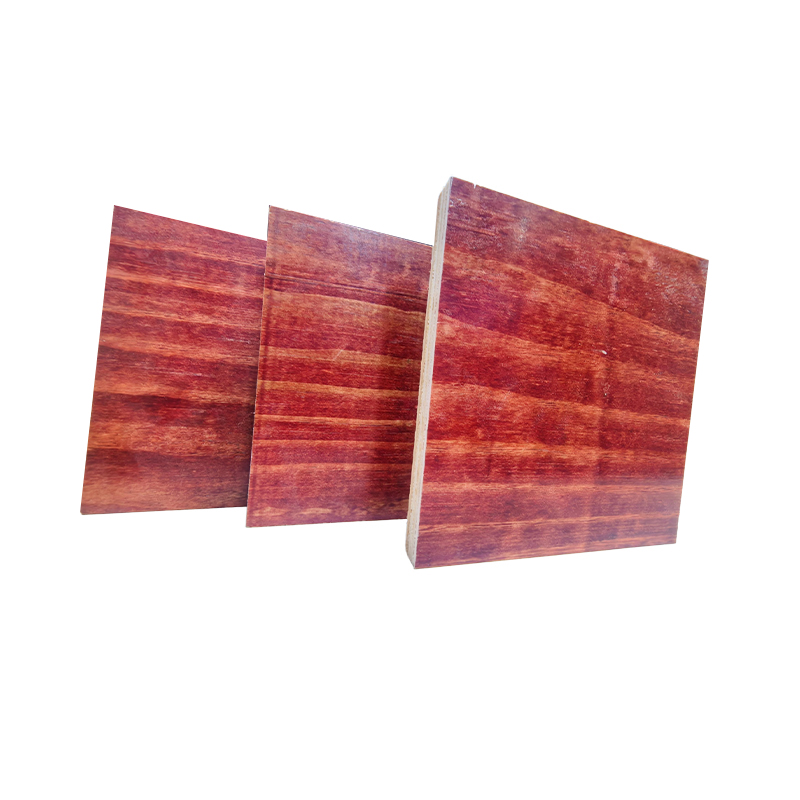
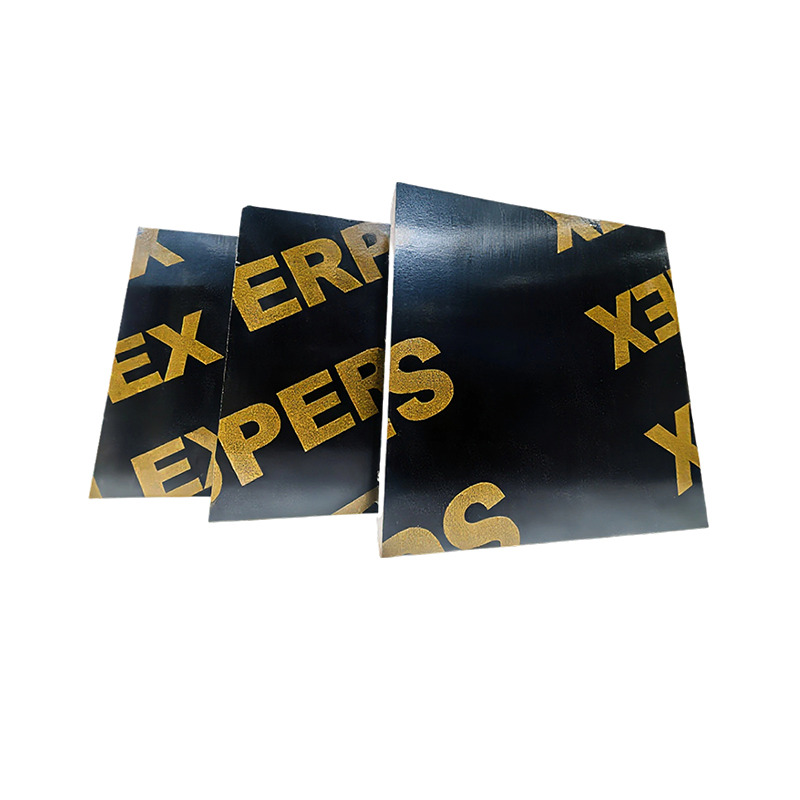
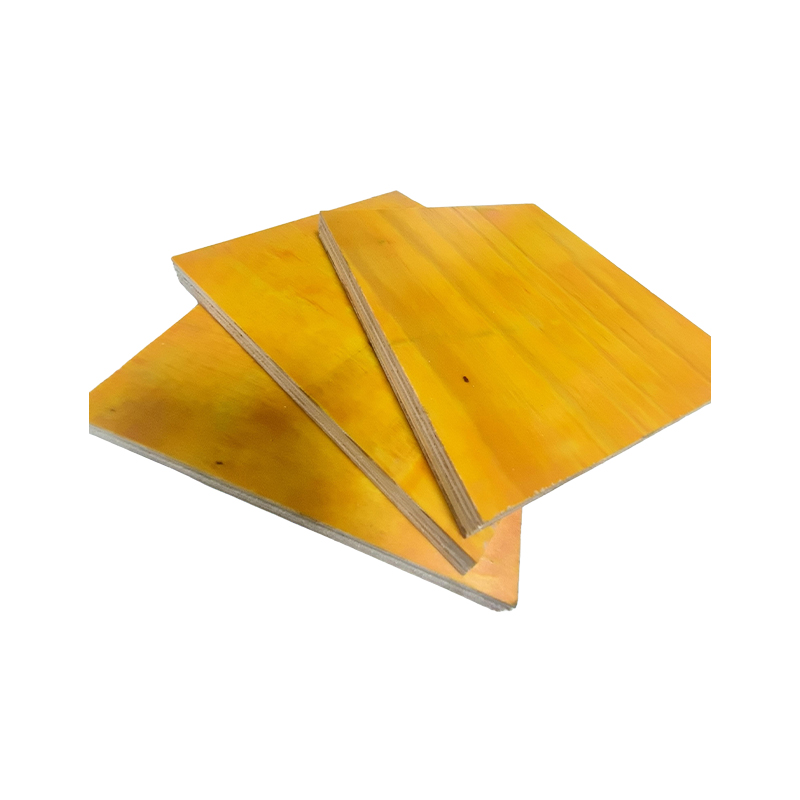
Under the lateral pressure of concrete, ordinary wooden formwork is prone to bulging and grout leakage, leading to uneven wall surfaces or even formwork bursting. However, the Building Formwork Gold Board, with its high elastic modulus of the aluminum alloy frame and a dense protective layer formed by double-layer curing surface treatment, significantly improves overall bending stiffness. Its internal poplar or pine core is impregnated with phenolic resin film paper under high temperature and pressure, resulting in high surface hardness and low water absorption, effectively resisting moisture erosion from the concrete. Under the high-impact environment of pump pouring, the formwork does not deform or bulge, and the concrete surface after demolding is smooth as a mirror, requiring almost no secondary plastering, directly achieving a fair-faced concrete effect, significantly saving on later decoration costs.
3. Demolding and Reuse Stages: Durability Achieves Full-Cycle Economy
Traditional wooden formwork typically only lasts 5-10 uses, while Building Formwork Gold Board, thanks to the corrosion resistance of its aluminum alloy frame and the wear-resistant and scratch-resistant properties of its laminated surface, can be reused more than 50 times. The double-layer curing process not only enhances surface hardness but also forms a hydrophobic barrier, preventing cement slurry penetration and adhesion. Demolding is easy, requiring no pry bar for forceful removal, protecting the integrity of concrete edges. Even in humid or alkaline environments, the aluminum alloy frame will not rust, and the laminated layer will not peel off, ensuring consistent molding quality with each use, truly achieving "one-time investment, long-term benefit."
4. Customization and System Integration: Flexible Adaptation to Complex Engineering Needs
This formwork system consists of four main modules: the formwork body, the support system, fasteners, and specialized accessories. It supports flexible customization of thickness, length, and opening positions, efficiently handling irregular structures such as beam-column joints, curved walls, and stairs. The aluminum alloy frame features standardized interfaces for easy connection to early-stripping heads and independent steel supports, forming a stable overall support system. In the construction of super high-rise core tubes or bridge piers, this systematic design significantly improves construction safety and verticality control accuracy.
Building formwork gold board is not simply a combination of materials, but a culmination of structural engineering thinking and advanced manufacturing processes. Throughout the entire construction chain—from formwork erection and pouring to demolding and reuse—it achieves a true balance between functionality and economy by improving efficiency with lightweight construction, ensuring quality with high rigidity, and reducing costs with durability. With the deepening of green building and intelligent construction, this type of high-performance composite formwork will undoubtedly become a crucial support for future building industrialization.
1. Formwork Erection Stage: Lightweight Design Significantly Improves Installation Efficiency
Building Formwork Gold Board uses 6061-T6 aerospace-grade aluminum alloy for its frame and reinforcing ribs, with a density only 1/3 that of steel. The weight of a single formwork panel is more than 40% lighter than traditional steel formwork. In high-rise buildings or confined work areas, workers can handle and quickly position the formwork by hand, significantly reducing labor intensity and safety risks. Meanwhile, the vertical and lateral reinforcing ribs are formed through a single extrusion process, avoiding deformation and stress concentration caused by traditional welding, ensuring highly accurate geometric dimensions of the formwork. Combined with standardized connection holes and a quick-release buckle system, the formwork erection speed is increased by more than 30%, making it particularly suitable for prefabricated buildings with tight schedules or repetitive construction projects.
2. Concrete Pouring Stage: High Rigidity Structure Ensures Forming Quality
Under the lateral pressure of concrete, ordinary wooden formwork is prone to bulging and grout leakage, leading to uneven wall surfaces or even formwork bursting. However, the Building Formwork Gold Board, with its high elastic modulus of the aluminum alloy frame and a dense protective layer formed by double-layer curing surface treatment, significantly improves overall bending stiffness. Its internal poplar or pine core is impregnated with phenolic resin film paper under high temperature and pressure, resulting in high surface hardness and low water absorption, effectively resisting moisture erosion from the concrete. Under the high-impact environment of pump pouring, the formwork does not deform or bulge, and the concrete surface after demolding is smooth as a mirror, requiring almost no secondary plastering, directly achieving a fair-faced concrete effect, significantly saving on later decoration costs.
3. Demolding and Reuse Stages: Durability Achieves Full-Cycle Economy
Traditional wooden formwork typically only lasts 5-10 uses, while Building Formwork Gold Board, thanks to the corrosion resistance of its aluminum alloy frame and the wear-resistant and scratch-resistant properties of its laminated surface, can be reused more than 50 times. The double-layer curing process not only enhances surface hardness but also forms a hydrophobic barrier, preventing cement slurry penetration and adhesion. Demolding is easy, requiring no pry bar for forceful removal, protecting the integrity of concrete edges. Even in humid or alkaline environments, the aluminum alloy frame will not rust, and the laminated layer will not peel off, ensuring consistent molding quality with each use, truly achieving "one-time investment, long-term benefit."
4. Customization and System Integration: Flexible Adaptation to Complex Engineering Needs
This formwork system consists of four main modules: the formwork body, the support system, fasteners, and specialized accessories. It supports flexible customization of thickness, length, and opening positions, efficiently handling irregular structures such as beam-column joints, curved walls, and stairs. The aluminum alloy frame features standardized interfaces for easy connection to early-stripping heads and independent steel supports, forming a stable overall support system. In the construction of super high-rise core tubes or bridge piers, this systematic design significantly improves construction safety and verticality control accuracy.
Building formwork gold board is not simply a combination of materials, but a culmination of structural engineering thinking and advanced manufacturing processes. Throughout the entire construction chain—from formwork erection and pouring to demolding and reuse—it achieves a true balance between functionality and economy by improving efficiency with lightweight construction, ensuring quality with high rigidity, and reducing costs with durability. With the deepening of green building and intelligent construction, this type of high-performance composite formwork will undoubtedly become a crucial support for future building industrialization.