


How do building film-faced panels redefine the efficiency and quality of concrete pouring with their smooth surface and robust structure?
Release Time : 2026-02-27
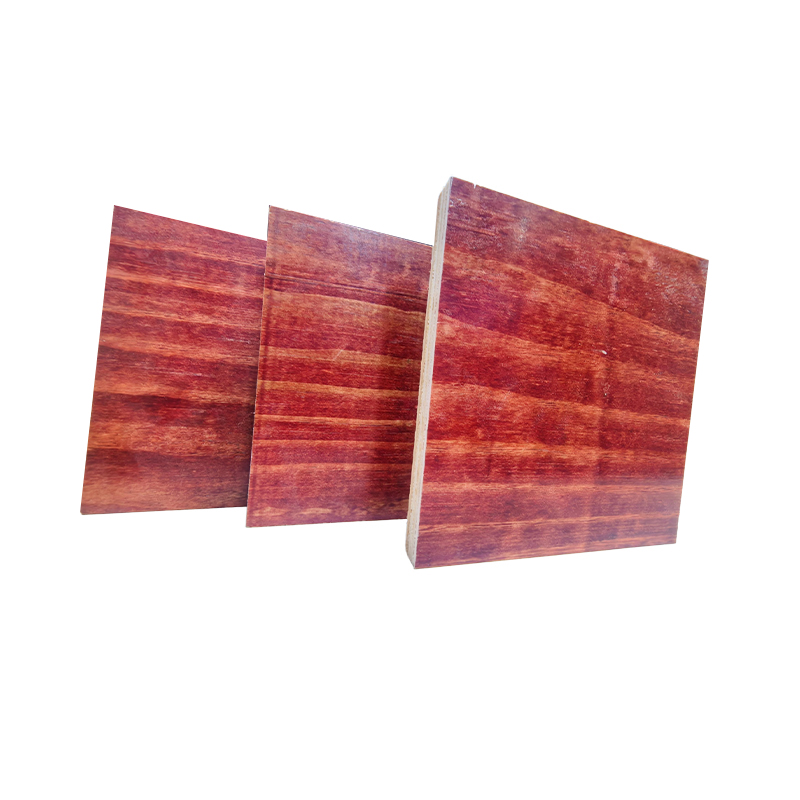
In modern construction engineering, the surface quality of concrete structures is not only crucial to architectural aesthetics but also directly impacts the cost and timeline of subsequent finishing processes. Traditional wooden formwork is prone to water absorption and deformation, resulting in a rough surface that often requires extensive sanding and repair after demolding. While steel formwork is sturdy, it is heavy, expensive, and unsuitable for complex shapes. Building film-faced panels have emerged to address this need—using high-quality plywood as the base material, covered with a high-strength impregnated resin film, and molded under high temperature and pressure in a single piece, they form a new type of formwork system that combines a smooth finish, high strength and durability, and ease of construction. This has become a key material for improving the appearance quality and construction efficiency of concrete in major projects such as high-rise buildings, bridges, and tunnels.
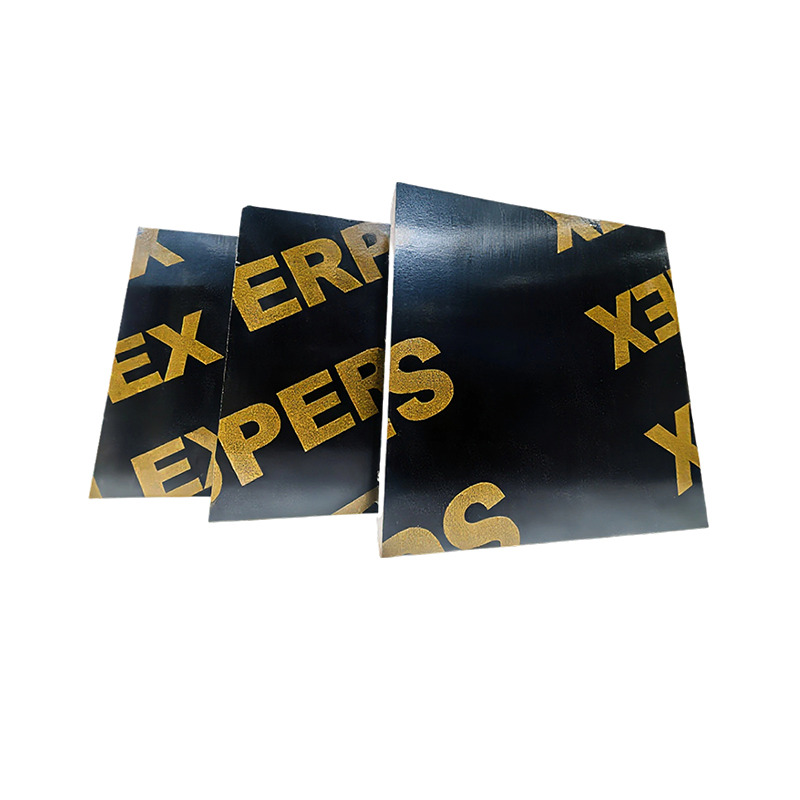
The core advantage of film-faced panels lies first and foremost in their superior surface performance. The dense, smooth, non-absorbent, and non-dust-adhesive phenolic or melamine-impregnated film covering the board effectively prevents moisture penetration during concrete pouring, thus preventing the substrate from expanding and deforming. During demolding, the concrete separates smoothly from the formwork without leaving residue, achieving a smooth and clean surface close to fair-faced concrete in a single molding process. This significantly reduces subsequent wet work such as plastering and sanding, shortening the construction period, and also gives the building facade or structural components a delicate and uniform texture, meeting the modern architectural design pursuit of "exposed beauty."
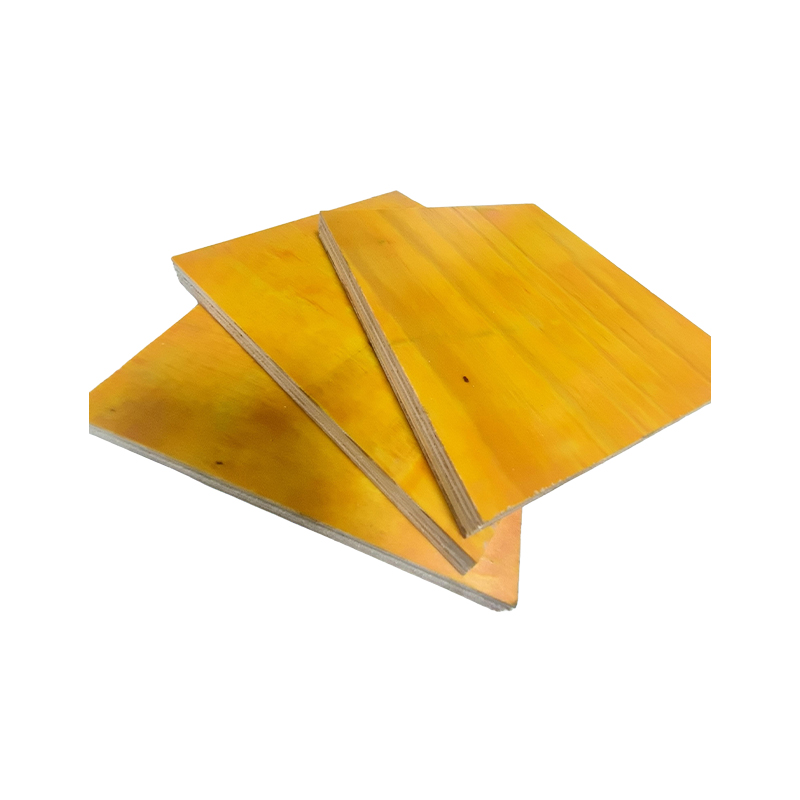
Its structural stability is equally reliable. The high-quality plywood substrate undergoes rigorous drying and bonding processes to ensure no internal voids or warping. The film layer and substrate are deeply fused under high temperature and pressure, forming a composite board with strong integrity and high bending stiffness. Even in humid environments or during multi-layer reuse, it maintains dimensional stability and is not prone to delamination, bulging, or edge cracking. This "one-time investment, multiple uses" characteristic significantly reduces the cost per use, making it particularly suitable for high-rise residential buildings or bridge pier projects with repeated construction of standard floor heights.
Improved construction efficiency is another significant value of film-faced plywood. The plywood is significantly lighter than steel formwork, facilitating manual handling and high-altitude installation; standard dimensions and flat edges support rapid splicing, reducing on-site cutting errors; the surface is scratch-resistant and alkali-resistant, able to withstand repeated contact with vibrators without damage. Workers can complete formwork erection, alignment, and dismantling without complex tools, greatly improving workflow. In large-scale projects with tight deadlines and high quality requirements, this "quick assembly and disassembly, ready-to-use" capability becomes a crucial support for ensuring project milestones are met.
A deeper significance lies in the fact that film-faced plywood promotes the implementation of green building concepts. Its high turnover rate reduces timber consumption and construction waste; the smooth surface reduces concrete waste and repair material usage; some products use environmentally friendly adhesives and recyclable film, further reducing the ecological burden. Driven by "dual carbon" goals, this resource-efficient formwork system aligns perfectly with the development direction of sustainable infrastructure construction.
Furthermore, film-faced plywood is highly adaptable. By adjusting the substrate thickness and coating type, diverse needs can be met for walls, floors, beams, columns, and even curved structures. Special textured coatings can also directly impart decorative effects such as stone and wood grain to concrete, expanding architectural design language. From city landmarks to cross-sea bridges, from subway tunnels to airport terminals, film-faced panels, with their reliable performance, silently support the precision and speed of modern engineering.
Although building film-faced panels are only temporary structures, they are the "sculptors" of the final appearance of concrete. They protect the purity of concrete with a thin film, bearing immense weight with a resilient substrate, transforming the engineer's blueprint into a solid and elegant reality with every pour and demolding. When sunlight shines on the smooth, mirror-like concrete wall, that silent texture is the quality promise written behind the scenes by the film-faced panels—because true architectural beauty lies not only in its magnificent form but also in the meticulous craftsmanship of every inch of its surface.
The core advantage of film-faced panels lies first and foremost in their superior surface performance. The dense, smooth, non-absorbent, and non-dust-adhesive phenolic or melamine-impregnated film covering the board effectively prevents moisture penetration during concrete pouring, thus preventing the substrate from expanding and deforming. During demolding, the concrete separates smoothly from the formwork without leaving residue, achieving a smooth and clean surface close to fair-faced concrete in a single molding process. This significantly reduces subsequent wet work such as plastering and sanding, shortening the construction period, and also gives the building facade or structural components a delicate and uniform texture, meeting the modern architectural design pursuit of "exposed beauty."
Its structural stability is equally reliable. The high-quality plywood substrate undergoes rigorous drying and bonding processes to ensure no internal voids or warping. The film layer and substrate are deeply fused under high temperature and pressure, forming a composite board with strong integrity and high bending stiffness. Even in humid environments or during multi-layer reuse, it maintains dimensional stability and is not prone to delamination, bulging, or edge cracking. This "one-time investment, multiple uses" characteristic significantly reduces the cost per use, making it particularly suitable for high-rise residential buildings or bridge pier projects with repeated construction of standard floor heights.
Improved construction efficiency is another significant value of film-faced plywood. The plywood is significantly lighter than steel formwork, facilitating manual handling and high-altitude installation; standard dimensions and flat edges support rapid splicing, reducing on-site cutting errors; the surface is scratch-resistant and alkali-resistant, able to withstand repeated contact with vibrators without damage. Workers can complete formwork erection, alignment, and dismantling without complex tools, greatly improving workflow. In large-scale projects with tight deadlines and high quality requirements, this "quick assembly and disassembly, ready-to-use" capability becomes a crucial support for ensuring project milestones are met.
A deeper significance lies in the fact that film-faced plywood promotes the implementation of green building concepts. Its high turnover rate reduces timber consumption and construction waste; the smooth surface reduces concrete waste and repair material usage; some products use environmentally friendly adhesives and recyclable film, further reducing the ecological burden. Driven by "dual carbon" goals, this resource-efficient formwork system aligns perfectly with the development direction of sustainable infrastructure construction.
Furthermore, film-faced plywood is highly adaptable. By adjusting the substrate thickness and coating type, diverse needs can be met for walls, floors, beams, columns, and even curved structures. Special textured coatings can also directly impart decorative effects such as stone and wood grain to concrete, expanding architectural design language. From city landmarks to cross-sea bridges, from subway tunnels to airport terminals, film-faced panels, with their reliable performance, silently support the precision and speed of modern engineering.
Although building film-faced panels are only temporary structures, they are the "sculptors" of the final appearance of concrete. They protect the purity of concrete with a thin film, bearing immense weight with a resilient substrate, transforming the engineer's blueprint into a solid and elegant reality with every pour and demolding. When sunlight shines on the smooth, mirror-like concrete wall, that silent texture is the quality promise written behind the scenes by the film-faced panels—because true architectural beauty lies not only in its magnificent form but also in the meticulous craftsmanship of every inch of its surface.